|
|
 |
Adolphe Yvon
|
|
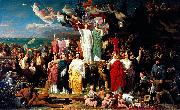
Adolphe Yvon (1817-1893) was a French painter known for his paintings from the Napoleonic Wars. Yvon studied under Paul Delaroche, rose to fame during the Second Empire, then finished his career as a teacher.
Shortly after the end of the Crimean War in September 1855, Yvon was commissioned by the French government to paint a large picture of the capture of the Malakoff at Sevastopol. He sailed for the Crimea on February 19, 1856 where he spent six weeks compiling a portfolio of sketches, as well as visiting the battlefield of Inkerman. In 1857, the finished painting La Prise de la tour de Malakoff 8 septembre 1855 was shown at the Paris Salon, and two years later came La Gorge de Malakoff, and La courtine de Malakoff. La Prise was a massive piece measuring 6 metres by 9 metres and represented the moment when the fortification was captured around midday.
In the succeeding years, Emperor Napoleon III began to admire his battle scenes; naturally he glorified the carnage of Napoleon I's campaigns. Yvon became an officer of the Legion d'Honneur in 1867, and painted Napoleon III's portrait the following year (unlocated). Yvon was known as the leading teacher of drawing at the Ecole des Beaux-Arts (1863-83). A few Americans received instruction from him, including Christian Schussele, Alfred Wordsworth Thompson, William Sartain, and J. Alden Weir. The latter took Yvon's afternoon life-drawing class starting in the fall of 1874. Yvon provided the subject for compositional sketches for his students, for example, The Assassination of Julius Caesar, for which he specified how it should be done: Caesar covers his head with his toga. |
|
|
|
 |
Alexander Yakovlevich GOLOVIN
|
|
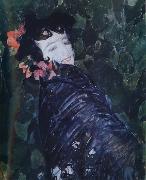
an important Russian artist and stage designer who designed sets for many productions by Sergei Diaghilev,1863-1930 |
|
 |
Alexander Young Jackson
|
|
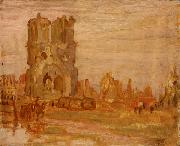
(October 3, 1882 - April 5, 1974) was a Canadian painter and a founding member of the Group of Seven.
As a young boy, Jackson worked as an office boy for a lithograph company, after his father abandoned his family of six children. It was at this company that Jackson began his art training. In the evenings, he took classes at Montreal's Monument-National
In 1905, Jackson worked his way to Europe on a cattle boat, returning by the same means and travelling on to Chicago. In Chicago, he joined a commercial art firm and took courses at the Art Institute of Chicago. He saved his earnings and, by 1907, was able to visit France to study Impressionism. In France, Jackson decided to become a professional painter, studying at Paris' Academie Julian under J.P. Laurens.
|
|
 |
Antonio Viladomat y Manalt
|
|
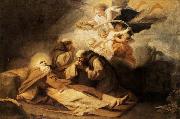
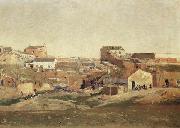
Spanish, 1678-1755,Spanish Catalan painter. He was the most significant figure in Catalan painting from the end of the 17th century to the first half of the 18th. He trained with P. B. Savall and J. B. Perram?n in Barcelona. The arrival of the Archduke Charles (later Charles VI) of Austria in Barcelona in 1703 as a pretender to the throne during the War of the Spanish Succession (1702-13), accompanied by such Italian artists as Ferdinando Galli-Bibiena, acquainted Viladomat y Manalt with artistic trends in Italy. He experienced problems with the artists' guild in Barcelona because of his refusal to participate in the traditional work system. Despite this, his workshop-academy became a centre for the training of numerous painters, sculptors and engravers. Viladomat y Manalt was principally a religious painter, and his oil paintings include Christ Appearing to St Ignatius of Loyola (c. 1711-20; Barcelona, Jesuit Convent) and St Augustine and the Holy Family (Madrid, Prado). He also painted such murals as the tempera Angels with the Sudarium (c. 1727; Matare, S Mar?a, Capilla de los Dolores), but most of the others have disappeared. He painted an extensive series of monastic and evangelical works, in which his revival of compositions characteristic of the Spanish Golden Age is apparent. Examples include the Stigmatization of St Francis (c. 1724; Barcelona, Mus. A. Catalunya), part of a cycle of paintings on the life of St Francis commissioned for the cloister of the convent of S Francisco de As?s in Barcelona. His late Baroque style is related to the severe and realistic trend in Spanish painting in the early 17th century. Some interesting profane allegories by the artist are extant, notably the series Four Seasons (c. 1720-30; Barcelona, Mus. A. Catalunya), which consists of landscapes with genre scenes. Several of the still-lifes by Viladomat y Manalt such as the realistic Still-life with Dead Turkey (Barcelona, Mus. A. Catalunya), which has strong contrasts of light, bear an affinity with Neapolitan painting of the last decades of the 17th century. |
|
 |
Aureliano De Beruete Y Moret
|
|
Spanish , Madrid, 1845 - Madrid, 1912
Spanish writer, painter and collector. After pursuing a political career and taking a doctorate in civil and canon law, he dedicated himself to writing on art and produced important studies on Diego Velezquez (1898), Joaqu'n Sorolla y Bastida (1901) and other artists. He travelled extensively and enthusiastically in Europe (France, Belgium, Switzerland, the Netherlands, Italy, Germany, England and elsewhere), studying especially the different national schools of painting. On his travels he also painted landscapes. After working for some time as a copyist in the Museo del Prado, Beruete decided in 1873 to concentrate his efforts on painting and on learning to perfect his craft. He enrolled at the Escuela Superior de Bellas Artes de S Fernando in Madrid and also studied at the studio of Carlos de Haes. Beruete was among the founders of the Instituci'n Libre de Enseeanza, and with its members, and with Carlos de Haes, he made several study trips abroad. In Paris he came to know the painting of the Barbizon school, and in Belgium he assimilated the teaching of the generation of landscape artists who had adopted a form of Realism. |
|
|
|
|
|
 |
David Teniers the Younger
|
|
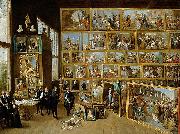
(December 15, 1610 C April 25, 1690), a Flemish artist born in Antwerp, was the more celebrated son of David Teniers the Elder, almost ranking in celebrity with Rubens and Van Dyck. His son David Teniers III and his grandson David Teniers IV were also painters. His wife Anna nee, Anna Breughel was the daughter of Jan Brueghel the Elder and the granddaughter of Pieter Bruegel the Elder.
Through his father, he was indirectly influenced by Elsheimer and by Rubens. The influence of Adriaen Brouwer can be traced to the outset of his career. There is no evidence, however, that either Rubens or Brouwer interfered in any way with Teniers's education, and Smith (Catalogue Raisonne) may be correct in supposing that the admiration which Brouwer's pictures at one time excited alone suggested to the younger artist his imitation of them. The only trace of personal relations having existed between Teniers and Rubens is the fact that the ward of the latter, Anne Breughel, the daughter of Jan (Velvet) Breughel, married Teniers in 1637.
|
|
 |
David Young Cameron
|
|
British master of landscape and architectural views.
Glasgow ,1865-1945
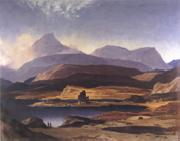
is a Scottish painter and etcher. He was trained at the Glasgow and Edinburgh Schools of Art in the 1880s. From 1887-1892 he was a member of the Royal Society of Painter-Etchers. It was during this time that he published a number of sets of etchings (such as "The Clyde Set", "The North Holland Set" and "The North Italian Set"). In general his prints feature areas of great darkness, offset by highlights. Cameron would later become known for his church interiors and barren landscapes of Scotland done in drypoint. The feathery lightness of these drypoints was in visual contrast with the rock and water of the subjects. He became highly sought after by collectors, until the Great Crash in 1929 brought a collapse in prices for prints in general. He exploited his popularity by producing an unprecedented number of states of his prints, and is believed to hold the record at twenty-eight states in one case. Cameron became a Royal Academician in 1920.
|
|
|
|
 |
Federico de Madrazo y Kuntz
|
|
1815-1894
Spanish
Federico de Madrazo y Kuntz Gallery
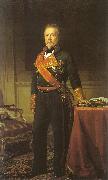
Born in Rome, he was the son of the painter Madrazo y Agudo (1781-1859), and received his first instruction from his father. While still attending the classes at the Royal Academy of San Fernando, he painted his first picture, The Resurrection of Christ (1829), which was purchased by Queen Christina. Not long afterwards he painted Achilles in his Tent, and subsequently presented to the Academy The Continence of Scipio, which secured him admission as a member "for merit".
While decorating the palace of Vista Alegre he took up portraiture. In 1852 he went to Paris, where he studied under Franz Winterhalter, and painted portraits of Baron Taylor and Ingres. In 1837 he was commissioned to produce a picture for the gallery at Versailles, and painted "Godfrey de Bouillon proclaimed King of Jerusalem". The artist then went to Rome, where he worked at various subjects, sacred and profane. Then he painted Maria Christina in the Dress of a Nun by the Bedside of Ferdinand III (1843), Queen Isabella, The Duchess of Medina-Coeli, and The Countess de Vilches (1845-1847), besides a number of portraits of the Spanish aristocracy, some of which were sent to the exhibition of 1855.
He received the Legion of Honour in 1846. He was made a corresponding member of the Paris Academy of Fine Arts on 10 December 1853, and in 1873, on the death of Schnorr, the painter, he was chosen foreign member. After his father's death he succeeded him as director of the Museo del Prado and president of the Academy of San Fernando. He originated in Spain the production of art reviews and journals, such as El Artiste, El Renacimiento, and El Semanario pintoresco. He died at Madrid in 1894.
|
|
 |
Fedor Yakovlevich Alekseev
|
|
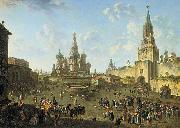
Fedor Yakovlevich Alekseev Russian: (c. 1753 - November 23, 1824) was an early Russian painter of landscape art.
After training in the Saint Petersburg Imperial Academy of Arts, he spent three years in Venice studying the works of famous French and Italian landscape painters.
Returning to Saint Petersburg to work, his popularity grew over time. In 1800, Emperor Paul of Russia commissioned a series of paintings of Moscow from him.
|
|
|
|
|
|
|
|
 |
Francisco Bayeu y Subias
|
|
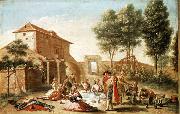
Spanish Painter, 1734-1795,was a Spanish painter, active in a Neoclassic style, whose main subjects were religious and historical themes. Born in Zaragoza, he received a broad childhood education. His initial art studies were with a local master, Jose Luzan[1] and Antonio Gonzalez Velazquez. He then moved to Madrid, winning a scholarship with the painting of the ????Tyranny of Gerion???? to study in the Academia Real de Bellas Artes de San Fernando. The death of his parents and the care of his brothers forced him to return to Zaragoza, until he was recalled by Anton Raphael Mengs to help decorate the Royal Palace of Madrid. In later years, one of his colleagues was Francisco Goya, who married his sister, Josefa Bayeu. He served as court painter to King Charles III of Spain. He was named a professor of the Royal Academy of Fine Arts of San Fernando in 1765 and director in 1788. He painted in the Charterhouse of Aula Dei in Zaragoza. In 1767 he was named court painter for Charles III, king of Spain. He was involved in the decoration of various Royal palaces near Madrid. |
|
 |
Francisco de goya y Lucientes
|
|
b. March 30, 1746, Fuendetodos, Spain--d. April 16, 1828,
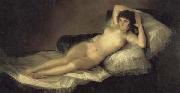
Goya is considered the 18th Century's foremost painter and etcher of Spanish culture, known for his realistic scenes of battles, bullfights and human corruption. Goya lived during a time of upheaval in Spain that included war with France, the Inquisition, the rule of Napoleon's brother, Joseph, as the King of Spain and, finally, the reign of the Spanish King Ferdinand VII. Experts proclaim these events -- and Goya's deafness as a result of an illness in 1793 -- as central to understanding Goya's work, which frequently depicts human misery in a satiric and sometimes nightmarish fashion. From the 1770s he was a royal court painter for Charles III and Charles IV, and when Bonaparte took the throne in 1809, Goya swore fealty to the new king. When the crown was restored to Spain's Ferdinand VII (1814), Goya, in spite of his earlier allegiance to the French king, was reinstated as royal painter. After 1824 he lived in self-imposed exile in Bordeaux until his death, reportedly because of political differences with Ferdinand. Over his long career he created hundreds of paintings, etchings, and lithographs, among them Maya Clothed and Maya Nude (1798-1800); Caprichos (1799-82); The Second of May 1808 and The Third of May 1808 (1814); Disasters of War (1810-20); and The Black Paintings (1820-23). |
|
|
|
 |
Frans Pourbus the younger
|
|
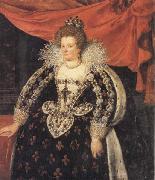
Flemish Baroque Era Painter, 1569-1622
was a Flemish painter, son of Frans Pourbus the Elder and grandson of Pieter Pourbus. He was born in Antwerp and died in Paris. He is also referred to as "Frans II". Pourbus worked for many of the highly influential people of his day, including the Brussels-based Spanish Regents of the Netherlands, the Duke of Mantua and Marie de' Medici, Queen of France. Works of his can be found in the Louvre, the Prado, the Rijksmuseum, the Royal College of Art, the Metropolitan Museum of Art and many other museums. |
|
|
|
|
|
 |
George Dance the Younger
|
|
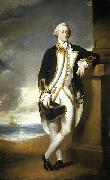
George Dance the Younger (1 April 1741 - 14 January 1825) was an English architect and surveyor. The fifth and youngest son of George Dance the Elder, he came from a distinguished family of architects, artists and dramatists. He was hailed by Sir John Summerson as "among the few really outstanding architects of the century", but few of his buildings remain.
He was educated at the St. Paul's School, London. Aged 17, he was sent to Italy to prepare himself for an architectural career and joined his brother Nathaniel, who was studying painting in Rome. George was a member of academies in Italy, showing much promise as a draughtsman, and much of his later work was inspired by Piranesi, with whom he was acquainted.
He succeeded his father as City of London surveyor and architect on his father's death in 1768, when he was only 27. He had already distinguished himself by designs for Blackfriars Bridge, sent to the 1761 exhibition of the Incorporated Society of Artists.
His earliest London project was the rebuilding of All Hallows-on-the-Wall church in 1767. His first major public works were the rebuilding of Newgate Prison in 1770 and the front of the Guildhall, London. His other London works include the church of St Bartholomew-the-Less (1797). In Bath he largely designed the Theatre Royal, built by John Palmer in 1804-5. Sir John Soane was a pupil.
Many of his buildings have been demolished, including the Royal College of Surgeons, Newgate Prison, St Luke's Hospital for Lunatics, the Shakespeare Gallery in Pall Mall, the library at Lansdowne House, the Common Council Chamber and Chamberlain's Court at the Guildhall, Ashburnham Place, and Stratton Park (demolished save for its Tuscan portico)
With his brother Nathaniel, he was a founder member of the Royal Academy in 1768, and its second professor of architecture, from 1798 to 1805. For a number of years, he was the last survivor of the 40 original Academicians.
|
|
|
|
|
|
 |
Hans holbein the younger
|
|
b. 1497, Augsburg, d. 1543, London
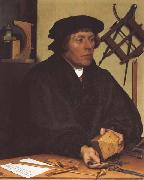
was a German artist and printmaker who worked in a Northern Renaissance style. He is best known as one of the greatest portraitists of the 16th century.[2] He also produced religious art, satire and Reformation propaganda, and made a significant contribution to the history of book design. He is called "the Younger" to distinguish him from his father, Hans Holbein the Elder, an accomplished painter of the Late Gothic school. Born in Augsburg, Holbein worked mainly in Basel as a young artist. At first he painted murals and religious works and designed for stained glass windows and printed books. He also painted the occasional portrait, making his international mark with portraits of the humanist Desiderius Erasmus of Rotterdam. When the Reformation reached Basel, Holbein worked for reformist clients while continuing to serve traditional religious patrons. His Late Gothic style was enriched by artistic trends in Italy, France, and the Netherlands, as well as by Renaissance Humanism. The result was a combined aesthetic uniquely his own. Holbein travelled to England in 1526 in search of work, with a recommendation from Erasmus. He was welcomed into the humanist circle of Thomas More, where he quickly built a high reputation. After returning to Basel for four years, he resumed his career in England in 1532. This time he worked for the twin founts of patronage, Anne Boleyn and Thomas Cromwell. By 1535, he was King's Painter to King Henry VIII. In this role, he produced not only portraits and festive decorations but designs for jewellery, plate, and other precious objects. His portraits of the royal family and nobles are a vivid record of a brilliant court in the momentous years when Henry was asserting his supremacy over the English church. Holbein's art was prized from early in his career. The French poet and reformer Nicholas Bourbon dubbed him "the Apelles of our time".[3] Holbein has also been described as a great "one-off" of art history, since he founded no school.[4] After his death, some of his work was lost, but much was collected, and by the 19th century, Holbein was recognised among the great portrait masters. Recent exhibitions have also highlighted his versatility. |
|
|
|
|
|
 |
Ignacio Zuloaga y Zabaleta
|
|
July 26, 1870 - October 31, 1945
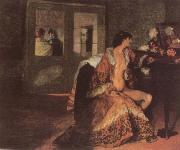
Spanish Basque painter. He studied in Paris in 1891, coming under the influence of Impressionism and of the group of Catalan painters around Santiago Rusieol. His visit to Andalusia in 1892 provided the key to his later work, leading him to replace the grey tonalities of his Paris paintings with more brightly coloured images of Spanish folkloric subjects and of male or female figures in regional dress, for example Merceditas (1911/13; Washington, DC, N.G.A.). Zuloaga turned to Castilian subjects in works such as Segoviano and Toreros de Pueblo (both 1906; both Madrid, Mus. A. Contemp.) after the defeat suffered by Spain in the Spanish-American War of 1898; like the group of writers known as the Generation of 98, with whom he was associated and who were among his most articulate supporters, he sought to encourage the regeneration of his country culture but with a critical spirit.. |
|
 |
Ilya Yefimovich Repin
|
|
1844-1930
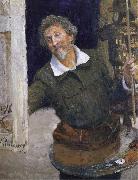
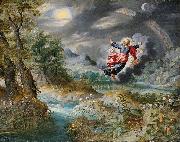
After training with a provincial icon painter and at the St. Petersburg Academy of Fine Arts, he visited France and Italy on an academy scholarship. On his return he began painting subjects from Russian history. In 1873 he achieved international fame with Volga Boatmen, a grim, powerful image that became the model for Soviet Socialist Realism. Among his best-known works is Ivan the Terrible and His Son Ivan (1895), depicting Ivan's murder of his son. He also painted vigorous portraits (including Leo Tolstoy and Modest Mussorgsky). In 1894 he became professor of historical painting at the St. Petersburg Academy. |
|
 |
Jan Brueghel the Younger
|
|
(September 13, 1601 C September 1, 1678) was a Flemish Baroque painter, and the son of Jan Brueghel the Elder.
He was trained by his father and spent his career producing works in a similar style. Along with his brother Ambrosius, he produced landscapes, allegorical scenes and other works of meticulous detail. Brueghel also copied works by his father and sold them with his father's signature. His work is distinguishable from that of his parent by being less well executed and lighter.
Jan the Younger was traveling in Italy when his father died of cholera and swiftly returned to take control of the Antwerp studio. He soon established himself and was made dean of the Guild of Saint Luke in 1630. That same year he was commissioned by the French court to paint Adam Cycle. In the following years, he also produced paintings for the Austrian court, and worked independently in Paris, before returning to Antwerp in 1657. He collaborated with a number of prominent artists including Rubens, Hendrick van Balen (1575-1632), Adriaen Stalbemt (1580-1682), Lucas Van Uden (1596-1672), David Teniers the Younger and his father-in-law Janssen. Jan the Younger's best works are his extensive landscapes, either under his own name or made for other artists such as Hendrick van Balen as backgrounds.
|
|
|
|
|
|
 |
Joaquin Sorolla Y Bastida
|
|
Spanish Realist/Impressionist Painter , 1863-1923
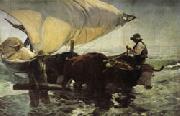
Spanish painter, b. Valencia. He is noted for his large landscapes in full, glowing sunlight, painted in strong color and in a bold, fluent style. Sorolla's best-known works include Beaching the Boat and The Swimmers. |
|
 |
jose Madrazo Y Agudo
|
|
Spanish Neoclassical Painter, 1781-1859
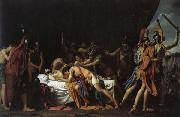
was a Spanish painter of the Neoclassic period. Born in Santander. Studied in Madrid with Cosme de Acuna and Gregorio Ferro, both rectors of the Academia de San Fernando at the beginning of the 19th century. Don Fernando La Serna, who was named ambassador to France at the time, brought Madrazo to Paris, where he entered the studio of Jacques-Louis David. There, under royal patronage from King Carlos IV, he executed a painting of the Death of Lucretia and other canvases on events from classic Greco-Roman history. He moved to Rome during Napoleonic times, where he was briefly jailed for failing to complete oaths of loyalty to the newly installed Napoleon II of France as King of Rome. In Rome, he was admitted to the Accademia di San Luca. King Carlos IV named him pintor de camara (painter of the chamber), a position confirmed by King Ferdinand VII. |
|
|
|
 |
Juan Antonio Ribera Y Fernandez
|
|
1779-1860
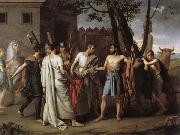
was a Spanish painter, born at Madrid. He first studied under Francisco Bayeu and enrolled into the Royal Academy of San Fernando, but afterwards went to Paris and become the pupil of Jacques-Louis David. There he painted his Cincinnatus which is now in the Prado Museum. In course of time he went to Rome, and in 1811 was appointed painter to Carlos IV and member of the Academy of St. Luke; and in 1820, honorary member of the Academy of San Fernando. In 1838 he was made professor, and two years afterwards Director of the Prado. He died at Madrid. |
|
 |
Juan van der Hamen y Leon
|
|
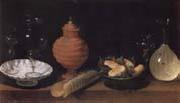
Spanish Baroque Era Painter, 1596-1631, was a Spanish painter, a master of the still life paintings, also called bodegones. During his lifetime, he was prolific and versatile, painting allegories, landscapes, and large-scale works for churches and convents. However, today he is remembered mostly for his still lifes. In the 1620s, He popularized still life painting in Madrid.Juan van der Hamen y (Gemez de) Leen was born in Madrid in 1596 but he was baptized late on April 8, 1596 in Madrid, therefore, he must had been born there just days before that date. He was the son of Jehan van der Hamen, a Flemish courtier, who had moved to Madrid from Brussels before 1586, and Dorotea Whitman Gemez de Leen, a half-Flemish mother of noble Toledan ancestry [1]. Van der Hamen and his two brothers Pedro and Lorenzo (both of whom were writers) emphasized their Spanish roots by using all or part of their maternal grandmother's family name, Gemez de Leen.. The painter's father, Jan van der Hamen, had come to Spain, as an archer, to the court of Philip II were he settled, married, and his children were born. According to 18th-century sources, the artist's father had also been a painter, but there is no evidence for this. Juan van der Hamen inherited his father's honorary positions at court and also served as unsalaried painter of the king. Van der Hamen's artistic activity in the service of the crown is first recorded on 10 September 1619, when he was paid for painting a still-life for the country palace of El Pardo, to the north of Madrid. |
|
|
|
 |
karl yens
|
|
1868-1945
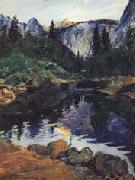
was a United States painter who specialised in coastal views. Born in Germany, he emigrated to the U.S. and settled in Laguna Beach, California. He was a founding member of the California Water Color Society. |
|
|
|
 |
Leonardo Alenza Y Nieto
|
|
b Madrid, 6 Nov 1807; d Madrid, 30 June 1845
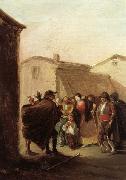
Spanish painter and illustrator. He studied at the Real Academia de S Fernando, Madrid, under Juan Antonio Ribera y Fern?ndez and Jos? de Madrazo y Agudo. He worked independently of court circles and achieved some fame but nevertheless died in such poverty that his burial was paid for by friends. He is often described as the last of the followers of Goya, in whose Caprichos and drawings he found inspiration for the genre scenes for which he became best known. Of these scenes of everyday life and customs the more interesting include The Beating (Madrid, Cas?n Buen Retiro) and Galician with Puppets (c. 1835; Madrid, Cas?n Buen Retiro; see SPAIN, fig. 17). Alenza y Nieto's numerous drawings include the illustrations for Alain-Ren? Lesage's Gil Blas (Madrid, 1840), for an edition of the poems of Francisco de Quevedo published by Castello and for the reviews Semanario pintoresco and El Reflejo. The painting Triumph of David |
|
|
|
 |
lorens pasch d. y
|
|
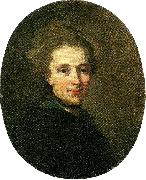
Lorens Pasch d.y., född 1733, död 1805, konstnär; professor vid Konstakademien från 1773. Son till Lorens Pasch d.ä., bror till Ulrika Pasch, brorsson till Johan Pasch. Invald tillsammans med sin syster i Konstakademien 1773. |
|
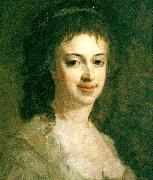 |
lorens pasch d.y
|
|
Lorens Pasch d.y., född 1733, död 1805, konstnär; professor vid Konstakademien från 1773. Son till Lorens Pasch d.ä., bror till Ulrika Pasch, brorsson till Johan Pasch. Invald tillsammans med sin syster i Konstakademien 1773. |
|
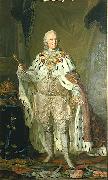 |
Lorens Pasch the Younger
|
|
(1733-1805) was a Swedish painter
He grew up in an artistic family (he was the brother of Ulrika Pasch, alongside whom he was elected to the Art Academy in 1773), but his father Lorens Pasch the Elder wanted him to become a priest. He was thus sent to study in Uppsala aged 10. However, he decided on an artistic career after all and began an apprenticeship in his father's studio before going to Copenhagen, with introductions from his wealthy and influential uncle Johan Pasch. There he studied painting for three years in the studio of Carl Gustaf Pilo. Despite good offers of studio-apprenticeships and commissions from Sweden, he then set off for Paris in 1758 to complete his artistic education. There he specialised in history painting in the studios of Eustache Le Sueur and François Boucher (though for financial reasons he also continued his training in portraiture) and became friends with fellow-Swede Alexander Roslin.
In 1764 he left Paris and got back to Sweden in 1766. He fully completed his training in the studio of the French painter Guillaume Taraval, who in 1735 founded the Royal Swedish Academy of Arts in Stockholm. Soon after his arrival back in Sweden Pasch's gained a great reputation as a portraitist, gaining favour and commissions from the royal court and gaining the esteem of Adolf Frederick, King of Sweden and his queen Louisa Ulrika - one of his most notable works is his Portrait of Louisa Ulrika of Prussia. He served as a professor at the Academy of Arts from 1773 to his death, becoming its director on Pilo's death in 1793. At the end of his life he concentrated more on training young artists and managing the Academy than on painting. He died unmarried in 1805 and due to his powerful portraits remains one of the most respected painters of the Gustavian era in Sweden. |
|
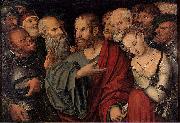 |
Lucas Cranach the Younger
|
|
(October 4, 1515 ?C January 25, 1586) was a German Renaissance artist, known for his woodcuts and paintings.
He was a son of Lucas Cranach the Elder who began his career as an apprentice in his father's workshop. Henceforth, his own reputation and fame grew. After his father's death, he assumed control over the workshop.
The style of their paintings can be so similar that there have been some difficulties in attribution of their works. |
|
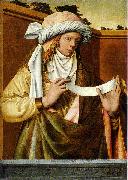 |
Ludger tom Ring the Younger
|
|
(1522-1584) was a German painter and draughtsman.
Ring was born in Menster. His father and brothers were also painters. Ring primarily painted portraits and still lifes. He died in Braunschweig in 1584.
|
|
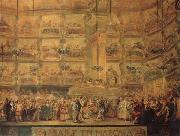 |
Luis Paret y alcazar
|
|
Spanish Rococo Era Painter, 1746-1799
was a Spanish painter of the late-Baroque or Rococo period. He was born in Madrid he first trained with Antonio Gonz??lez Velazquez and attended the Academia Real de San Fernando in Madrid, where he won a second prize in a painting contest in 1760, and first prize in 1766. He entered the studio of the French painter Charles de la Traverse, who worked for the Marchese of Ossun, the ambassador of France in Spain. Unfortunately upon returning to Madrid, despite becoming a teacher in the Academia de San Fernando at age 33 years, he mainly received royal commissions to paint and engrave vistas of ports, the Spanish equivalent of vedute, and also of planned works of construction. For some years, he was banished to Puerto Rico, where he trained the painter Jose Campeche. |
|
|
|
|